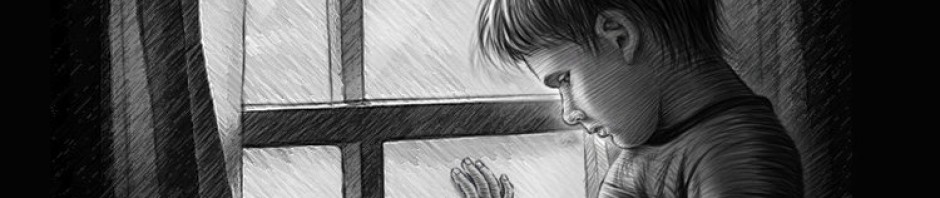
Intense World Syndrome

The worst (wrong) public understandings of Aspergers is a lack of care or feeling. I know that to be wrong on a personal level – in my teens and young adult years I had plenty of crying-to-sleep nights that were based on cares and feelings.

A new theory suggests that the opposite is true – we actually feel too much. It is known as Intense World Syndrome, with the idea being that Aspies and Autistic folk shut down due to an overload of the sense. I’m so mildly Aspie that I definitely have never rocked, but I do understand why someone would act that way in response to too much going on.

There’s an awesome article (The Boy Whose Brain Could Unlock Autism) at Matter.com about this theory, snippets here:

Kai was also socially odd: Sometimes he was withdrawn, but at other times he would dash up to strangers and hug them.

…Without warning, Kai, who was five at the time, darted out and tapped the deadly cobra on its head.

IMAGINE BEING BORN into a world of bewildering, inescapable sensory overload, like a visitor from a much darker, calmer, quieter planet. Your mother’s eyes: a strobe light. Your father’s voice: a growling jackhammer. That cute little onesie everyone thinks is so soft? Sandpaper with diamond grit. And what about all that cooing and affection? A barrage of chaotic, indecipherable input, a cacophony of raw, unfilterable data.

Just to survive, you’d need to be excellent at detecting any pattern you could find in the frightful and oppressive noise. To stay sane, you’d have to control as much as possible, developing a rigid focus on detail, routine and repetition. Systems in which specific inputs produce predictable outputs would be far more attractive than human beings, with their mystifying and inconsistent demands and their haphazard behavior.

…Preventing Kai from harming himself by running into the street or following other capricious impulses was a constant challenge. Even just trying to go to the movies became an ordeal: Kai would refuse to enter the cinema or hold his hands tightly over his ears.

However, Kai also loved to hug people, even strangers, which is one reason it took years to get a diagnosis. That warmth made many experts rule out autism. Only after multiple evaluations was Kai finally diagnosed with Asperger syndrome, a type of autism that includes social difficulties and repetitive behaviors, but not lack of speech or profound intellectual disability.

…But more significant is that when pregnant women take high doses of VPA [an epilepsy drug called valproic acid (VPA; brand name, Depakote)], which is sometimes necessary for seizure control, studies have found that the risk of autism in their children increases sevenfold. One 2005 study found that close to 9 percent of these children have autism.

…While ordinary rats get scared of an electrified grid where they are shocked when a particular tone sounds, VPA rats come to fear not just that tone, but the whole grid and everything connected with it—like colors, smells, and other clearly distinguishable beeps.

…Hyper-responsive sensory, memory and emotional systems might explain both autistic talents and autistic handicaps, they realized. After all, the problem with VPA rats isn’t that they can’t learn—it’s that they learn too quickly, with too much fear, and irreversibly.

…They thought back to Kai’s experiences: how he used to cover his ears and resist going to the movies, hating the loud sounds; his limited diet and apparent terror of trying new foods.

[I was terrified of trying new foods as a child, and my parents could not get that I wasn’t just being a normal kid in this regard.]

…This has profound implications for autism. If autistic babies tune out when overwhelmed, their social and language difficulties may arise not from damaged brain regions, but because critical data is drowned out by noise or missed due to attempts to escape at a time when the brain actually needs this input.

…The VPA model also captures other paradoxical autistic traits. For example, while oversensitivities are most common, autistic people are also frequently under-reactive to pain.

[I have always considered myself to be able to handle pain in an above-average way, although my fear of pain is high. It’s a hard thing to judge and compare…]

The same is true of VPA rats. In addition, one of the most consistent findings in autism is abnormal brain growth, particularly in the cortex. There, studies find an excess of circuits called mini-columns, which can be seen as the brain’s microprocessors. VPA rats also exhibit this excess.

Moreover, extra minicolumns have been found in autopsies of scientists who were not known to be autistic, suggesting that this brain organization can appear without social problems and alongside exceptional intelligence.

Like a high-performance engine, the autistic brain may only work properly under specific conditions. But under those conditions, such machines can vastly outperform others—like a Ferrari compared to a Ford.

…. In May, for example, the German software firm SAP announced plans to hire 650 autistic people because of their exceptional abilities. Mathematics, musical virtuosity, and scientific achievement all require understanding and playing with systems, patterns, and structure. Both autistic people and their family members are over-represented in these fields, which suggests genetic influences.

…When someone else’s pain becomes too unbearable to witness, even typical people withdraw and try to soothe themselves first rather than helping—exactly like autistic people. It’s just that autistic people become distressed more easily, and so their reactions appear atypical.

“The overwhelmingness of understanding how people feel can lead to either what is perceived as inappropriate emotional response, or to what is perceived as shutting down, which people see as lack of empathy,” says Emily Willingham. Willingham is a biologist and the mother of an autistic child; she also suspects that she herself has Asperger syndrome. But rather than being unemotional, she says, autistic people are “taking it all in like a tsunami of emotion that they feel on behalf of others. Going internal is protective.”

——

I do have a minor problem with the Intense World Syndrome theory. While my mildness might be a factor, I reckon if I found a situation to be so intense and overwhelming that I shut down – that I would be able to describe this to others, to researchers.

Yes it is hard if your baseline is overwhelmed. But surely many Aspergers have worked it out for themselves – everybody else in the cinema is handling the deafening sound fine, so it is me that has the problem.

For me personally, I get claustrophobic – too much going on in one place. When I enter a large social situation (rock concert, wedding, lecture) I will usually be against a wall and close to an exit – in case I need to escape. But these apply mostly to new situations. Repeated situations don’t have me on guard nearly as much.

Posted in Science | Comments Off on Intense World Syndrome

Autism – Extreme Male Brain

This from New Scientist:

AUTISM seems to cause female, but not male, brains to look more masculine. This suggests that one controversial view of autism, as an extreme version of the male brain, may need rethinking.

Simon Baron-Cohen at the Autism Research Centre in Cambridge, UK, has found that men tend to be better at systematising tasks and females better at empathising ones – though it’s unclear whether these differences are innate. As people with autism tend to be good systematisers and below average empathisers, he has argued that autism may be an extreme version of the male brain, or EMB.

Baron-Cohen’s team used MRI scans to look for differences in the volume of various brain regions in 120 adults, half men, half women, half with autism, half without. Differences between females with and without autism were similar to the differences between ordinary male and female brains, supporting the EMB theory. However, the brains of males with autism were no more male than those without.

So, autistic females seem to have more male-like brains, but being a male with autism doesn’t affect brain volume – I guess because the required volume is already there in those brain regions.

So now I am thinking, is there a connection between lesbianism and autism? According to autism-help.org:

Autistic adults have, in general, differences in sexuality from the norm. Many more are asexual than in the average population. It is believed that there is a slightly higher pecentage of gays, lesbians, bisexual, and transgendered autistics than in the average population.

I would suggest that lesbians are more likely to be slightly on the autistic scale, especially Asperger’s.

Posted in Sexuality | Comments Off on Autism – Extreme Male Brain

John Elder Robison

You just have to make the transition from weird to eccentric and you’ll be OK.

John  Elder Robison is a good example of a typical Aspie, if there is such a thing. It affected his life both negatively and positively. Watch:

Posted in Videos | Comments Off on John Elder Robison

Writing On My Hand

I have always written on my hand to remind me do something. It works really well, because as an Aspy every time I see words I cannot help myself – I have to read them. In others, tying a string around my wrist wouldn’t be as effective.

Also, of course I care less about what other people think – whereas non-Aspys would take into consideration how much of a bad look writing on their hand would be.

Posted in Appearance | Comments Off on Writing On My Hand

Video: The Positives of Asperger’s

As the doctor says, most Aspie info is regarding the disability side of things. But there are major plus sides that should be acknowledged or even celebrated. He also mentions numerous very famous possible Aspies:

I love how he says: “if you have met one Aspie, you have met one Aspie”.

Posted in Videos | Comments Off on Video: The Positives of Asperger’s

Justice (and self-righteous-ness)

These are observations that are only based on myself and my son.

  • It is important to do things by the letter of the law, whether legal or just the correct way of doing something.
  • Except for when you feel like rebelling….
  • Criminals need to be brought to justice, regardless of the severity of the crime. I feel compelled to do so, even if I have no personal connection to the crime.

So far I have been lucky, I have only ever witnessed three crimes (that I feel are crimes). In each case I have been instrumental in the criminal being arrested.

  1. Witnessed a thief smash a car window and steal a radio-cassette player (yep, a long time ago…). Despite having drunk 1+ litres of wine and being barefoot, I grabbed two mates and we apprehended him and called the cops.
  2. Very drunk in the early AM, almost passed out on the sofa at a backpacker hostel, noticed someone leaving the premises, looking suspicious. Someone ran down the stairs and told me they’d just been robbed. I followed the suspect on foot, called the police from a pay phone (yep, a long time ago…) and directed them to him – then went to the cop shop and gave a statement.
  3. I was (technically) kidnapped by some young drunk psycho English lads. When they released me I called the cops with their licence plate number and they were soon arrested. A year later I was flown back to the U.K to testify and they received prison sentences.

My young son is very interested in the aspects of crime and punishment. More importantly (from an Aspie perspective), he is unable to admit fault, and cannot take criticism without having a meltdown. I’ve learned better over the years, but I still struggle with criticism. It doesn’t fit well with the righteousness and perhaps self-righteousness I have.

EXTRA: I’m watching TV and realizing why I love specific genres of movies and TV: I love watching self-righteous protagonists.

Posted in Crime, Maybe Just Me | Tagged | Comments Off on Justice (and self-righteous-ness)

I Hated Birthdays As A Child

Like any kid, I looked forward to and enjoyed receiving presents. And for the most part I learned to disguise any disappointment with the gifts, learned not to point out I already had it, it wasn’t something I liked etc.

Birthday parties were not something I enjoyed. I didn’t even want them. So much so that on one occassion I ran away from my own party and didn’t return until the other kids had gone home.

I guess social awkwardness becomes more of an issue when you are the center of attention, and birthday parties are one of those occassions.

Posted in Social | Comments Off on I Hated Birthdays As A Child

No Nightmares

I have twisted dreams. They are deviant, disgusting and depraved. If made into a movie my dreams would be widely condemned. Note: I am almost never the protagonist, just the observer. It’s a reflection of what I see in the real world, as opposed to desires or fantasies.

As a child I did have repeating nightmares – but since puberty they haven’t lost me any sleep, and I am no longer horrified.

Recurring themes include:

– failure to catch public transport
– cavernous, dripping, filthy public toilets
– flying (more like the Greatest American Hero than anything else)
– labyrinthine used bookstores
– losing control driving a vehicle

Posted in Maybe Just Me | Comments Off on No Nightmares

Unable To Finish / Ten Books At Once

This is definitely in the category of certainly Aspie.

In business it is the difference between major success and getting by. Although the Internet was my saviour, it makes my inattention far worse. At any one time I have 50+ browser tabs open.

That’s not counting the tabs I have saved under the delusion that I will return to them one day.

Ten is a fair number of books I have currently almost finished. Typically I am reading 2-3 books seriously concurrently, plus there are a handful that I recently read but didn’t quite finish the last chapter or two.

It does bother me the review copies I have received – finishing a book without moving onto another is a major effort. Writing a review even only a paragraph long is not something I should promise.

BTW, I have dozens of blogs, and within each are many half-finished posts. Nests within nests of incompletion.


Posted in Attention | Comments Off on Unable To Finish / Ten Books At Once

Memory

As an alcoholic I have grown to understand how my brain, when under-powered due to alcohol, makes logical decisions regarding which memories to store.

If it can be deduced later, I tend to not remember. For example, the moment I step into a cab and give my directions home, my memory shuts down. I have no social connection with the driver, so there is less importance to remember the journey.

Unlikely to be just an Aspie thing….

Posted in Maybe Just Me | Comments Off on Memory